GLP-1 and Menopause: What Every Woman Needs to Know
The Part Nobody Talks About: GLP-1 and Menopause at the Same Time
By Melissa | Menopause and GLP-1
When I started GLP-1 in January 2025, I knew a lot about weight loss. I had lost 100 pounds before without any medication. I had maintained that loss for years. I understood calories, protein, movement, and habits better than most people who step foot in a program.
What I did not understand was how menopause would change everything about the way GLP-1 worked in my body.
Nobody warned me. My program mentioned GLP-1 side effects and how to manage them. It did not mention that declining estrogen, muscle loss, and a slower metabolism would create a very different experience than what I might have had ten years earlier.
I had to figure most of it out myself. This post is what I learned.
What Menopause Is Actually Doing to Your Body
Menopause is not just the end of your period. It is a full hormonal shift that changes how your body stores fat, builds and keeps muscle, and responds to food and exercise.
When estrogen declines, several things happen at once. Your body begins storing more fat around your midsection instead of your hips and thighs. Your metabolism slows. Muscle becomes harder to build and easier to lose. Sleep is often disrupted, which further affects cortisol and fat storage.
None of this means weight loss is impossible. But it does mean the rules are different now. What worked in your 30s or early 40s will likely not produce the same results in perimenopause or menopause. The body you are working with today has different needs and different limitations than the one you had before.
I know this firsthand. I lost 100 pounds in my mid-40s through changes in structure and habits. Then menopause arrived, and I slowly regained 50 of those pounds despite knowing everything I knew. My body had changed. My old approach no longer fits.
You can read my full story in my first post. The short version: by the time I started GLP-1, I had already been through four back surgeries and spent years fighting a body that felt like it was working against me. Menopause was not the only variable. But it was a significant one.
Why GLP-1 Works Differently in Menopause
GLP-1 medications work by reducing appetite, slowing digestion, and helping regulate blood sugar. For many women, they also quiet the constant mental noise around food in a way that nothing else has. That part is real, and it matters.
But women in menopause face a specific challenge that does not get enough attention: the combination of reduced appetite and hormonal muscle loss can create a situation where you are losing weight, but losing the wrong kind.
Research from Johns Hopkins found that women on GLP-1 lose about 11% of their body weight on average, compared to about 7% for men. That sounds like good news. More weight lost. Faster results.
The catch is that a higher percentage of that loss can be lean muscle mass, especially in women who are not actively working to protect it. Menopause already increases the natural rate of muscle loss. Add GLP-1 appetite suppression without a clear protein strategy, and the problem compounds quickly.
This is not a reason to avoid GLP-1. It is a reason to go in with a plan.
The Muscle Loss Problem
Here is what happens to a lot of women on GLP-1 in menopause. The medication works. The scale moves. They feel less hungry, eat less, and start seeing results. Then, a few months in, they notice they feel weaker. Clothes fit differently than expected. The weight is coming off, but something feels off.
What often happens is muscle loss. When appetite is significantly suppressed and protein intake drops, the body lacks what it needs to maintain lean tissue. Combined with the muscle loss already occurring from declining estrogen, the result can be a smaller version of the same soft body composition.
I was not willing to let that happen. I had already been through chronic pain and four back surgeries. Strength was not optional for me. Mobility and independence were things I had fought hard to protect.
So from the beginning, I built protein tracking into my daily routine. Not perfectly. Not without effort. But consistently enough that it became a habit I still keep today, more than a year into maintenance.
I aim for 100 to 120 grams of protein per day. I use Weight Watchers to track my points and keep structure in my eating. I walk daily. I lift weights three times a week. On GLP-1, with a significantly reduced appetite, hitting protein targets takes focus. It does not happen automatically.
The Maintenance Problem
Weight loss on GLP-1 feels relatively straightforward for most women. The medication suppresses appetite. You eat less. The scale moves. You start to see results in ways you have not in years.
Maintenance is harder. And in menopause, it is harder still.
When estrogen is low, your body is already inclined toward fat storage and muscle loss. GLP-1 medication manages your appetite while you are on it. But the habits you build during weight loss determine whether you keep that weight off if your dose changes or if you eventually come off the medication entirely.
I have seen women in online communities celebrate hitting their goal weight and then quietly struggle six months later. The medication worked. The plan for after the medication did not exist.
I went into GLP-1 knowing I had regained 50 pounds after a previous major loss. I was not going to repeat that. So I treated the medication as a tool for building habits, not just losing weight. Every month I was losing, I was also reinforcing the behaviors I planned to carry into maintenance.
I reached maintenance in August 2025. I am still there now. The habits are doing the work that the medication started.
What I Wish Someone Had Told Me
If I could go back to January 2025 and hand myself a list, this is what it would say.
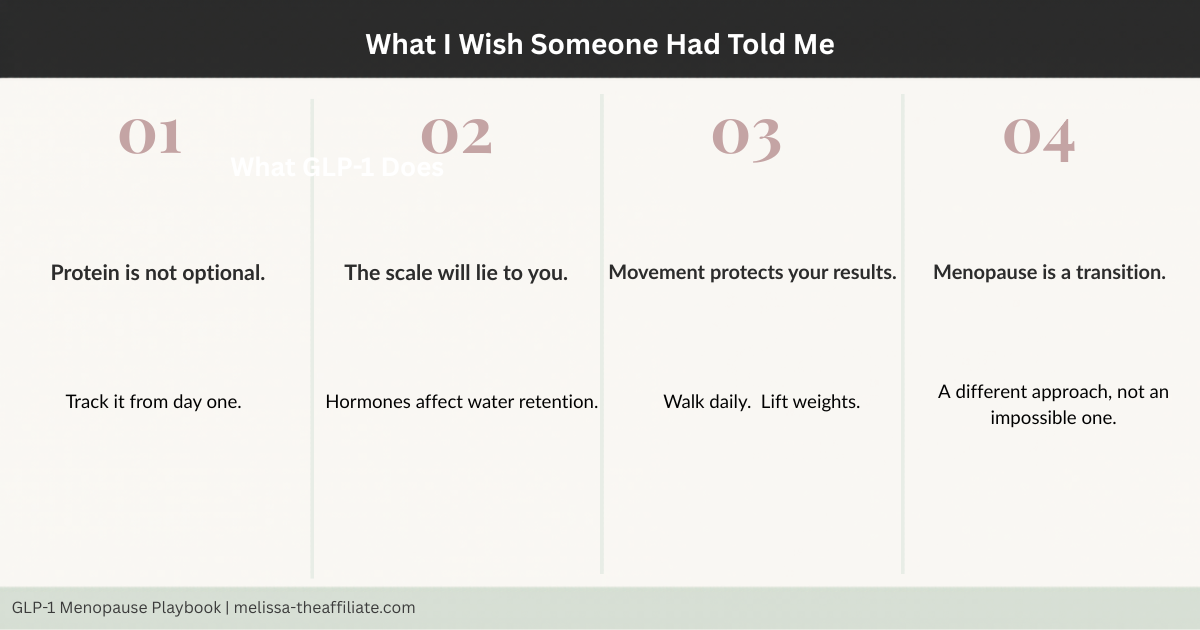
1. Protein is not optional.
GLP-1 will reduce your appetite significantly. That is part of how it works. But reduced appetite means you have to be deliberate about getting enough protein. In menopause, with muscle loss already accelerated, this matters more than it does for younger women or for men. I tracked my protein from the start. I still do. Aim for at least 100 grams per day. If you do not know what that looks like on a plate, start learning.
2. The scale will lie to you.
Hormonal fluctuations during perimenopause and menopause affect water retention in ways that show up on the scale. You can do everything right for a week and gain two pounds. You can have a rough week and lose three. The scale is one data point. How your clothes fit, how you feel, how much energy you have, and whether you are building strength are better measures of what is actually happening.
3. Movement protects your results.
Walking daily is one of the most underrated habits you can build while on GLP-1. It supports fat loss, helps preserve muscle, improves insulin sensitivity, and gives your metabolism something to work with even when your appetite is low. Resistance training matters even more. You do not need to become an athlete. You need to move consistently and progressively.
4. Menopause is a transition, not a life sentence.
The changes that come with declining estrogen are real, but they are not permanent obstacles. They are a new set of conditions that require a different approach. Women are losing significant amounts of weight in menopause with GLP-1 every day. The ones who keep it off are the ones who treated the process as a lifestyle shift rather than a short-term fix.
A Final Thought
I am 62 years old. I have been in maintenance for more than eight months. I take GLP-1 through Weight Watchers Clinic Med+. I track my protein, my points, my steps, and my strength.
I did not get here because the medication did all the work. I got here because I went into it knowing the medication was one part of a bigger picture.
Menopause made this harder than my previous weight loss. The back surgeries made it harder. The years of regain made it harder. None of that made it impossible.
If you are in perimenopause or menopause and considering GLP-1, or already on it and wondering why it feels different from what you expected, I hope this post gives you a clearer picture of what is happening in your body and what to do about it.
The GLP-1 Menopause Playbook is what I put together for women in this exact situation. It covers protein strategy, movement, what to expect in maintenance, and how to build the habits that keep the weight off after the hardest work is done. It is the guide I wish I had from the beginning.

Everything in this content is based on my own personal experience as a woman 45+ navigating GLP-1 and menopause. I am not a doctor, dietitian, or medical professional. Nothing here should be taken as medical advice. Always consult your healthcare provider before making changes to your diet, exercise, or medication routine. Results vary. This post contains affiliate links. If you purchase through one of my links, I may earn a commission at no extra cost to you. I only recommend programs I believe in.